
Most people's mental image of model building is a kit: open the box, glue the parts. There are no kits for what we do. Every custom model starts as an empty workbench and a question — what does this model need to accomplish? — and ends as a one-of-a-kind object, crated and on its way to a trade show, a training room, or a lobby. This is the long version of our model making process — what actually happens in between.
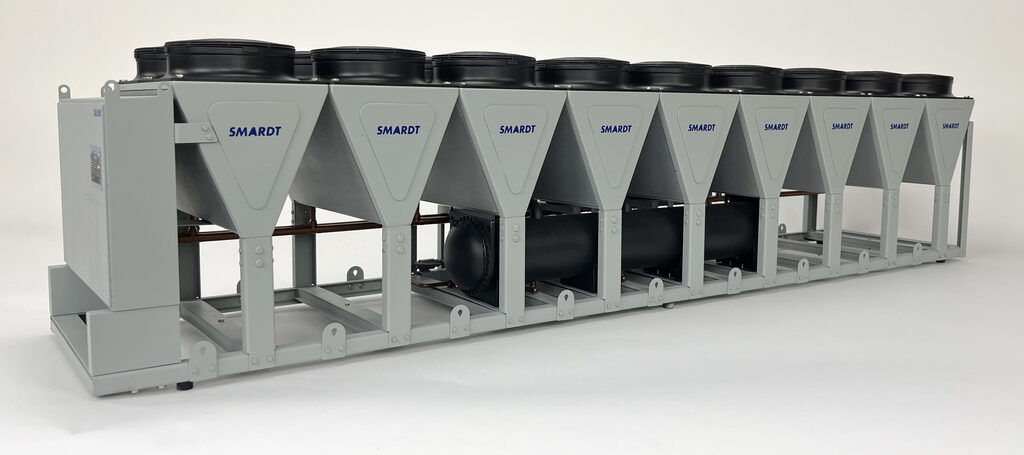
It starts with purpose, not parts
Before anyone touches material, we need to know what the model is for. A sales tool handled at fifty meetings a year, a museum piece expected to last generations, and a training model that gets disassembled daily are three different engineering problems that might depict the same object. Purpose drives everything downstream: scale, materials, level of detail, and how the model is built to survive its life. Get this question right and most later decisions answer themselves. (For help thinking it through, see our buyer's guide.)
Gathering the reference data
Next comes everything we can learn about the thing being modeled. Clients send whatever they have — 3D CAD files, 2D drawings, photographs, brochures — and part of the job is reading all of it fluently, whatever program or format it arrives in. CAD geometry is the fast lane: when a client can share engineering files, quoting and building both accelerate.
When they can't, the work turns forensic. We've built accurate models from a handful of photos and basic measurements, researching additional angles and specifications until the missing details are pieced together. However much or little you have, it's enough to start.
The mental teardown
Here's the part of the craft nobody sees. Before building anything, an experienced model maker assembles the finished model in their head — then takes it apart. Where do the seams go? What is each part made from? How does each piece fasten to the next — solvent, screws, solder, magnets? What gets painted before assembly, and in what order do the sub-assemblies come together?
This happens as a team. Projects get talked through at the bench, and different makers will argue for different approaches — machine that housing or cast it, brass or styrene for the frame. The plan that survives the argument becomes the build plan, with parts assigned to the people best suited to them. On larger projects it becomes a scheduled timeline, worked backward from the delivery date.
Drawing before building
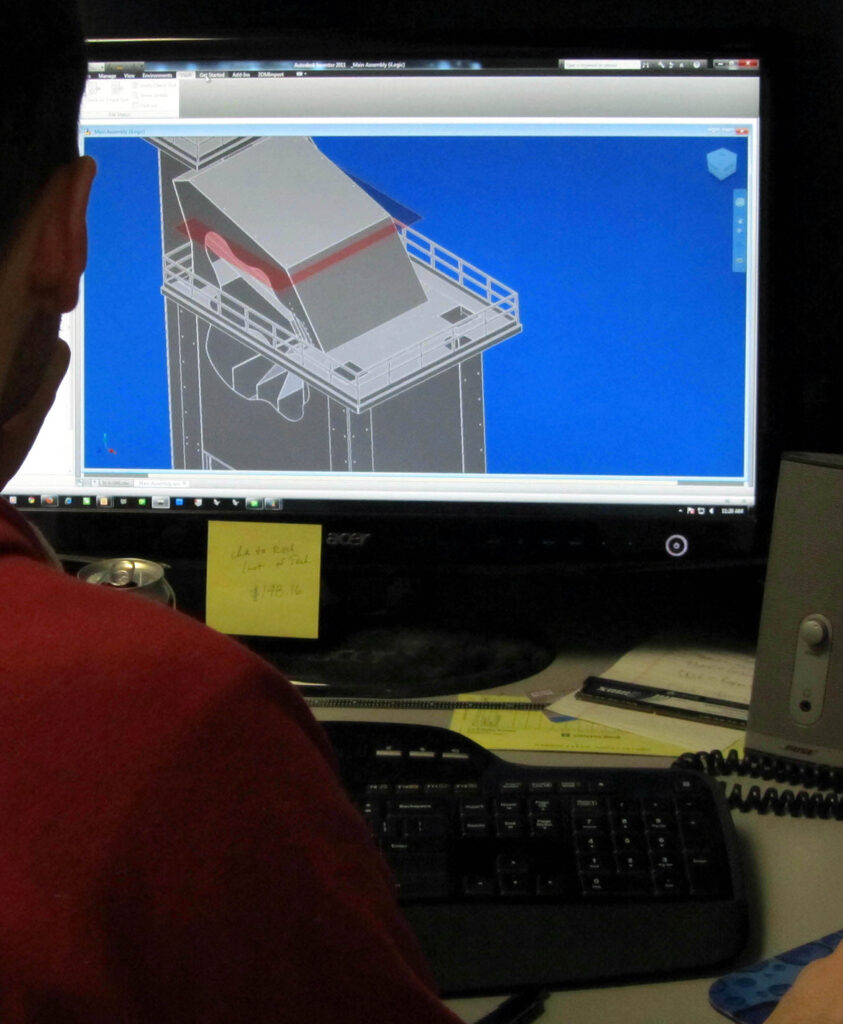
Much of a modern model is drawn before it's built. Parts are modeled in CAD, both to nail down dimensions and because the drawings drive the machines: the laser cutter, the CNC mill and router, the 3D printers. Precision that once took days of hand-fitting now comes off a machine bed accurate the first time.
But the drawing stage earns its keep another way: it forces problems to show up on screen, where they're cheap, instead of in material, where they aren't. Conflicting dimensions in client data, a mechanism that won't fit its housing, a part that can't be assembled in the planned order — the CAD stage catches them.
Choosing how each part gets made
A single model might contain machined brass, 3D printed resin, laser-cut acrylic, cast urethane parts, and pieces shaped entirely by hand. For every part, there's a choice of fabrication method, and the deciding factors are always the same: time, cost, accuracy, the material's behavior, and what the model must endure. Strength parts go to metal — brass solders beautifully and survives trade show handling. Complex organic shapes go to the printers. Repeated parts get molded and cast. The judgment about which method fits which part is a large share of what you're paying a professional shop for.
A typical case: a fleet of 1/10-scale helicopters we built on an eight-week deadline. Bodies CNC-carved from foam and resin-coated, blades machined and then molded and cast into multiples, turrets and missiles 3D printed, and a sheet-metal skeleton inside each body so display mounts could bolt on — with magnets holding rotors and props so the client could assemble and disassemble them at shows without tools. Four fabrication methods, one model, each chosen for what that part had to do.
Paint is not the last step
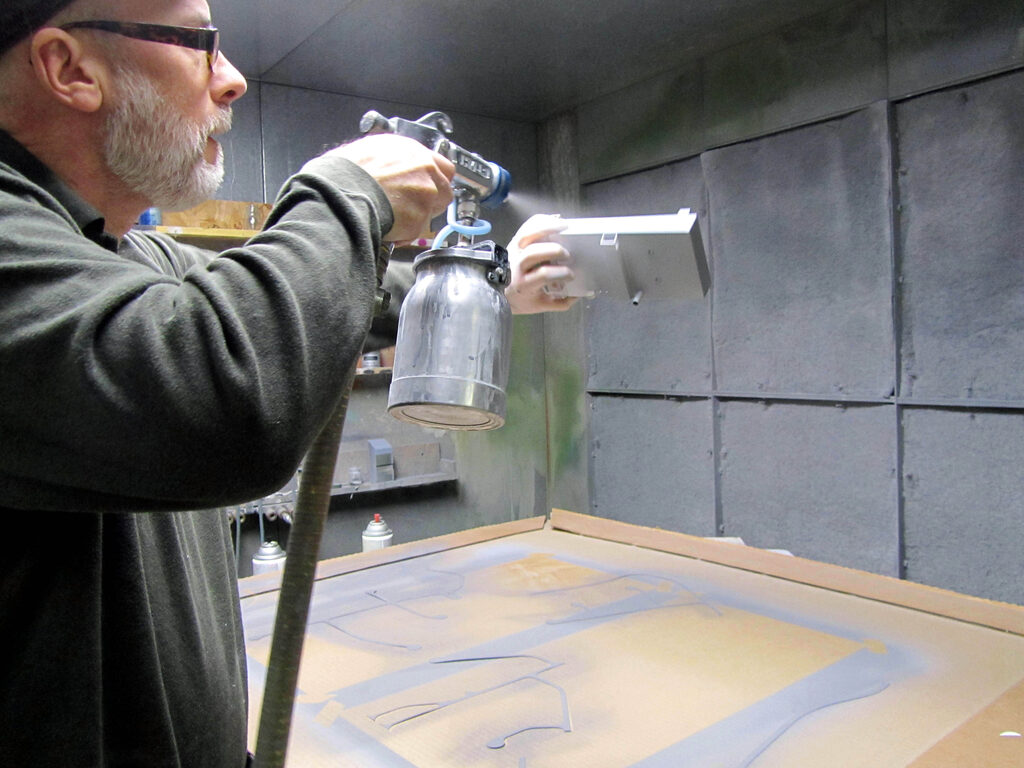
People assume paint comes at the end. It rarely does. Parts are generally painted before assembly — which means the paint plan is set early, because it dictates assembly order. Surfaces are primed, filled, and sanded until flawless, then sprayed; masking keeps each color crisp; the tiniest details get brushed in by hand. On historical work, we go one step further and deliberately weather the perfection back out — grime, fading, and rust, scaled down and researched to match the era.
Mistakes, changes, and the fix-it reflex
Honesty department: things go wrong in model making. Materials behave unexpectedly, a fabricated part misses spec, a client's engineering team revises the design mid-build. Pre-planning minimizes surprises; experience handles the rest. Troubleshooting is a core skill of the profession — problems get caught, fixed, and absorbed into the schedule, which is planned with exactly this in mind. Scope changes are handled in the open: new requirements get discussed and quoted before they're built, so the project stays on the rails financially as well as physically.
Tested, crated, gone
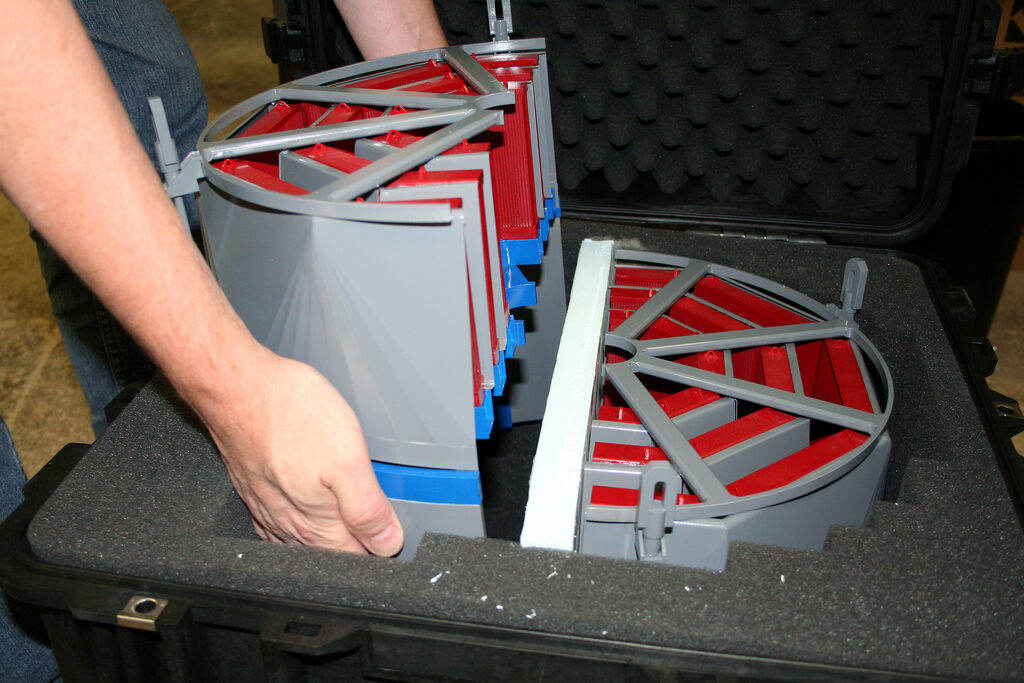
A model isn't done when it looks finished. Working features get cycled until we trust them; anything designed for assembly and disassembly gets assembled and disassembled until it's boring. Then the model is photographed, and the last build begins: the crate. Custom-carved foam in a hard case, or a purpose-built wooden crate, engineered around the model and the way it will travel. Delivery is planned backward from the date that matters — often a show date, and we've never missed one. The project is finished when the client opens the crate and everything is exactly right.
Start yours
Every model we've ever built started with someone describing a problem — usually with far less than a finished spec. Tell us what you're trying to show, and to whom, and we'll walk you through the rest.